Granite Countertops in Riverside, CA

A plain guide to granite countertops in Riverside, CA. Learn how slabs are chosen, templated, cut and installed, and how Inland Empire heat, dust and hard water affect the stone in your home.

What We Cover

Granite Countertops in Riverside, CA

Granite countertops suit Riverside County kitchens because the stone is hard, heat tolerant and holds up to daily cooking. From Jurupa Valley to the streets near the Mission Inn, the job follows the same path: prepare the room, pick the slab, template, install, then maintain the surface.

Preparing and Choosing

Preparation starts with an empty counter, cleared cabinets and a clear path from the driveway to the kitchen. Old tops, sinks and appliances that block access need to be out of the way before the crew arrives.

Slab selection comes next. Look at the full slab, not just a small sample, and check the veining, color range and any natural fissures. Stone from the same block can vary, so choose the exact slab that will be cut for your kitchen.

Template and Install Days

Templating records the exact shape of the cabinets, walls, sink and cooktop. The cabinets need to be level and fixed in place first, because the template follows what is actually there. Fabrication happens after that, in the shop.

On install day the slabs are carried in, dry fit, shimmed level and set on the cabinets. Seams are joined and color matched, the sink is mounted, and the surface is sealed and cleaned.

Climate, Sun and Water

Granite handles the dry Inland Empire heat well. Heat and sun rarely harm the stone, though outdoor kitchens collect dust when the Santa Ana winds blow, so they need regular wiping. Resin seams and sealers fade faster in direct sun than the granite does.

Hard water leaves white rings and spots, much like the mineral buildup common near the Santa Ana River. Wipe standing water dry, use a stone safe cleaner and keep the sealer fresh.

Guides

The guides cover kitchen preparation, choosing a slab, templating and installation, heat and sun effects, hard water marks, and how to judge a finished job.

Latest Guides

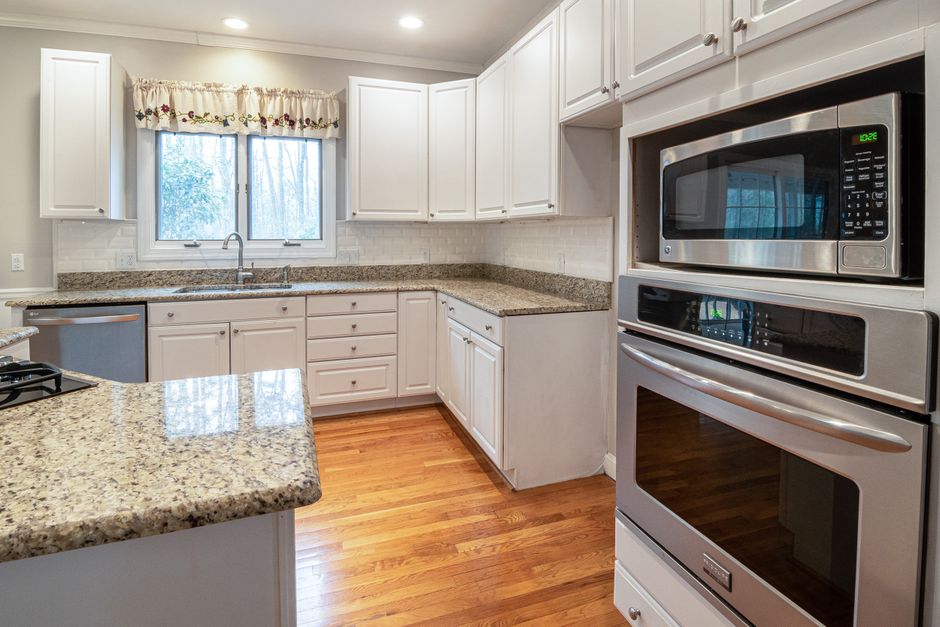
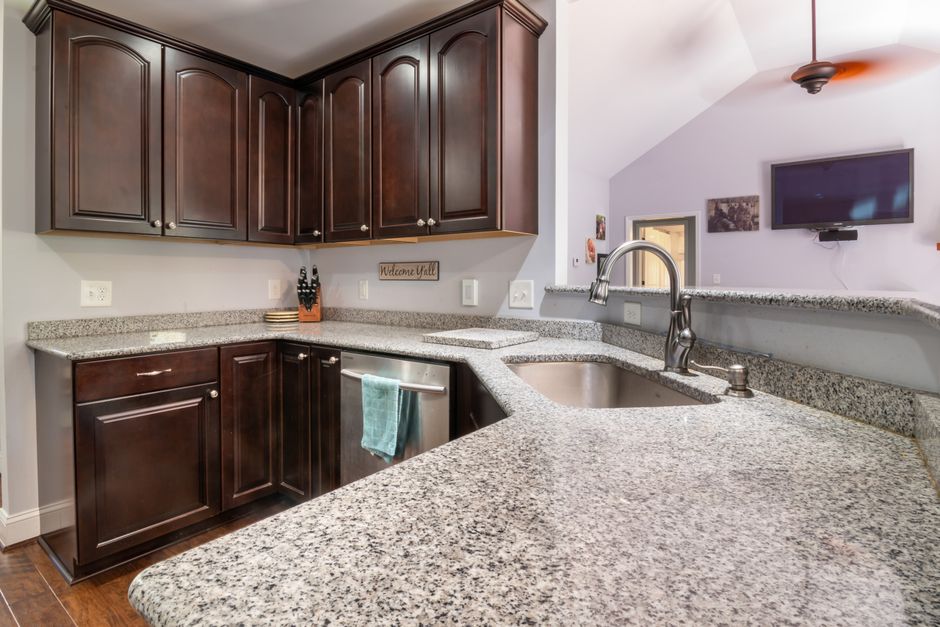
Sleek kitchen with dark cabinets, granite countertops, and stainless steel appliances.

Granite or Quartz Countertop in Riverside: Which Holds Up Better?

2026-10-26

Granite holds up better against heat and sun, while quartz holds up better against everyday spills and the need for upkeep. In a busy Riverside kitchen, that trade decides most of the question. The rest comes down to how the kitchen is used, where the light falls, and how well the slab is installed.

Why the two materials behave differently

Asian family having breakfast together in a cozy kitchen. Parents and toddler in a high chair.

Granite is natural stone cut from a quarry block. Quartz is an engineered slab made of crushed quartz bound together with polymer resin. Nearly every durability difference between them traces back to that resin.

The resin makes quartz nonporous, so liquids cannot soak in. It is also the part that reacts to heat and ultraviolet light. Granite has no resin to scorch, but it is porous to some degree, and that varies from slab to slab.

Heat: a hot pan is where quartz loses
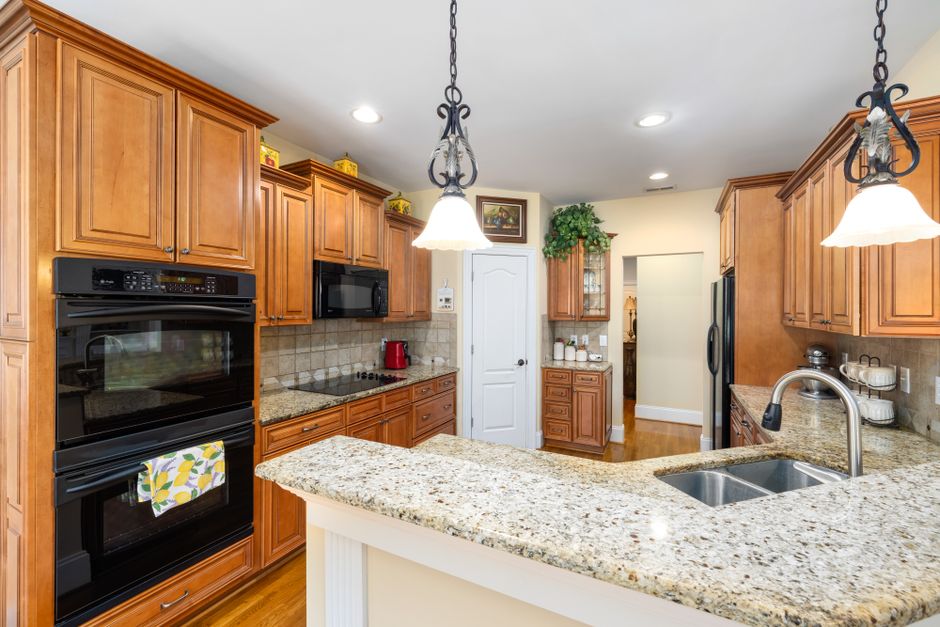
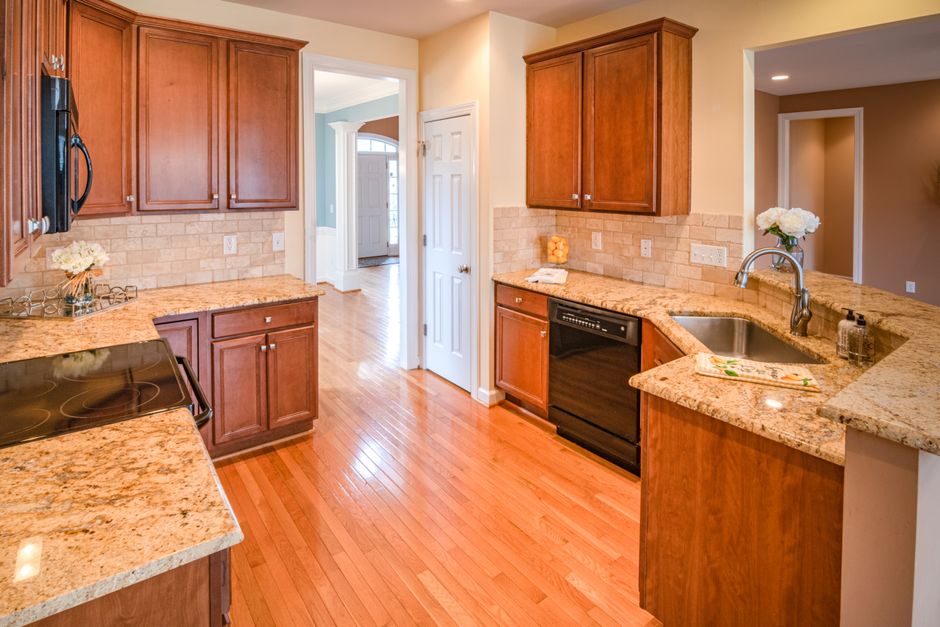
Spacious kitchen featuring wooden cabinets, granite countertops, and modern appliances.

A hot pan, a sheet tray straight from the oven, or a slow cooker or electric griddle left running can scorch or discolor the resin in quartz. That damage cannot be polished out. Quartz is not heatproof, and trivets belong under hot cookware every time.

Granite tolerates hot cookware much better. It is not immune to thermal shock, though. A very hot pot set down on a cold spot, especially near a sink or cooktop cutout, can start a crack. Trivets are good practice on both surfaces, but a lapse is far more forgiving on granite.

Sealing: where quartz wins

Quartz never needs sealing. For a household that cooks daily and does not want another chore, that is its biggest advantage.

Granite needs sealing only when it tells you so. Skip the fixed calendar and run a simple water test:

  • Put a few drops of water on the surface.
  • Wait several minutes.
  • If the stone darkens under the drops, it needs sealing.
  • If the water beads and the color stays the same, the sealer is still working.

Some dense granites rarely need resealing. Lighter, more porous slabs near the sink and cooktop may need it more often. Use a penetrating sealer made for stone and follow the label's cure time.

Stains: neither surface is stainproof

On under-sealed granite, cooking oil and grease leave dark blotches. A stone poultice can often draw them out. Quartz resists most stains, but permanent marker, turmeric, and hair dye can leave color behind if they sit. Wipe spills promptly on both.

Finish matters here too. Honed (matte) granite shows oil marks more readily than polished granite. Honed quartz can show metal scuff marks from pots and utensils. In a hard-used kitchen, polished finishes generally hide wear better.

Riverside sun: the deciding factor for some kitchens

Inland Riverside sun is strong. Quartz resin can yellow or fade under prolonged direct UV. That makes quartz a poor choice for an outdoor kitchen, a patio bar, or a counter sitting in direct sun under a large west-facing window.

Granite tolerates outdoor sun well and is the safer pick for anything outside. If the indoor kitchen has a big sunny window over the counter, that also tilts the choice toward granite.

Hard water on either surface

Riverside's tap water is hard, so expect white mineral rings around faucets, soap dispensers, and the sink rim on either material. Wipe those areas dry daily. For buildup, use a cleaner labeled safe for stone or quartz and a plastic scraper. Abrasive pads scratch the finish and should stay out of the kitchen.

Cleaning: simpler than the product aisle suggests

For daily cleaning of both materials, warm water, a little mild dish soap, and a soft cloth are enough. Specialty sprays are optional.

A few things to avoid:

  • On granite: vinegar and other acidic cleaners as routine cleaners. They can wear down the sealer over time. Some slabs sold as "granite" also contain calcite or other minerals that acids can dull.
  • On quartz: oven cleaners, strong degreasers, paint strippers, and other harsh solvents or high-alkaline products. They can attack the resin and leave dull or discolored patches.

Scratches, knives, and chips

Both materials resist scratching from normal use and are harder than kitchen knives. That is good for the counter and bad for the knives, so use a cutting board. During windy dry spells, gritty dust gets tracked in and can scuff a polished finish. Wipe the counter before sliding small appliances across it.

Neither surface is scratchproof or chip proof. Chips usually happen at edges: near the sink, next to the dishwasher, and wherever pots get banged. Eased, rounded, or beveled edge profiles chip less than sharp square edges. Small chips in either material can usually be filled with color-matched epoxy by a fabricator, though a seriously damaged slab is not always repairable invisibly.

Choosing the slab itself

Look at the actual slab before fabrication.

  • Granite: natural fissures follow the grain and are normal. A true crack can often be felt as a ridge or gap with a fingernail.
  • Quartz: look for uneven color, resin blotches, or pitting.

Installation decides how long either one lasts

A good slab on a poor base still fails. Several details matter more in a busy kitchen than the material choice.

Level cabinets

Many Riverside ranch homes from the mid twentieth century have older cabinets that have settled or are out of level. Stone does not flex. On an uneven base, stress builds and the slab can crack. The installer should check and shim the cabinets level, and it is worth asking whether a plywood subtop is needed, which is common practice with thinner slabs.

Overhangs at islands and bars

Large overhangs need hidden steel supports or corbels. A slab that people lean or sit on without enough support can crack at the cabinet edge. Ask how the overhang will be supported before approving the layout.

Seams

Seams are unavoidable on long runs and L shapes in both materials. A good seam is flat to the touch, tight, and filled with color-matched epoxy. Run a fingernail across it to check for a lip, and ask where seams will land before the cut.

Dishwasher and sink

Dishwashers cannot be screwed into the underside of stone. They need side-mount brackets fastened to the cabinets. A dishwasher that tips forward or rattles usually means that step was skipped.

Undermount sinks hang from clips anchored to the underside of the stone, plus a sealant bead. Watch for a gap opening between the sink rim and the counter, water stains in the sink base cabinet, or a sink that shifts under load. Fix these early, before water damages the cabinet.

Wall joints

Southern California homes shift slightly with temperature swings and ground movement. The joint where the countertop or backsplash meets the wall should be finished with flexible sealant, not rigid grout, so it does not crack and open.

A note on cutting quartz

Cutting engineered quartz produces fine crystalline silica dust, a serious lung hazard. Quartz should be cut and polished at the fabrication shop using wet methods. Do not allow anyone to dry cut quartz inside your home. If an on-site adjustment is unavoidable, it should be done wet, with dust control and respiratory protection.

Which one fits your kitchen

Choose granite if the kitchen gets heavy stovetop use, if hot pans land on the counter in the rush of dinner, if sun pours across the surface, or if any part of the project is outdoors. Choose quartz if the priority is a surface that never needs sealing and shrugs off most spills, and the household will reliably use trivets and keep it out of harsh sun.

Granite sealed when the water test calls for it, and quartz kept away from heat and strong chemicals, both last for many years. The better performer is the one whose weak point your kitchen is least likely to test.
Read more →

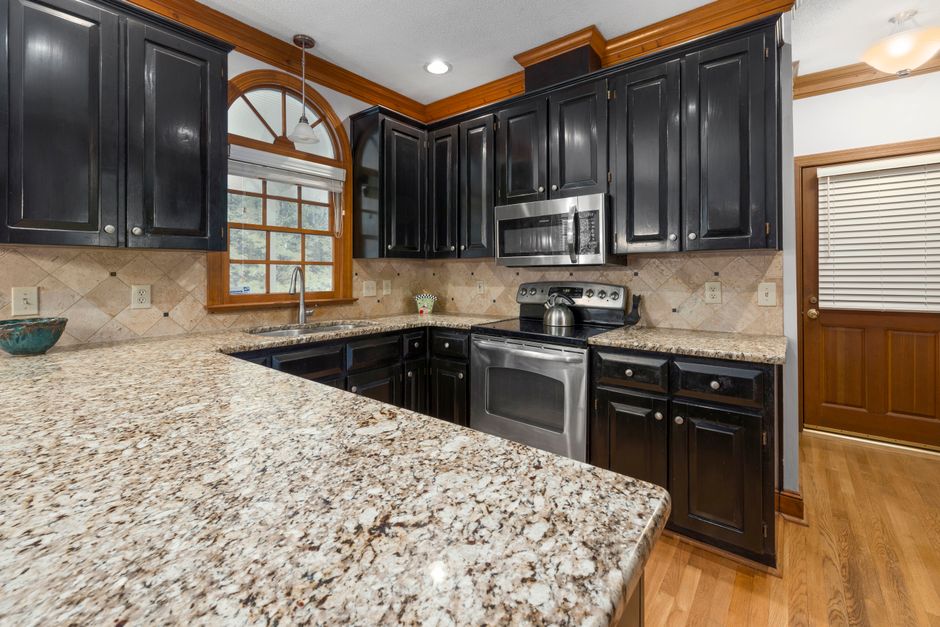
Contemporary kitchen design featuring granite countertops, dark wooden cabinets, and stainless steel appliances.

Can a Chipped or Cracked Granite Countertop Be Repaired in Riverside?

2026-10-26

Yes, a chipped granite countertop can almost always be repaired, and many cracked ones can be too. The deciding factor is not how bad the damage looks. It is whether the stone is still supported evenly underneath, because granite only reflects what is happening beneath it.

Start With the Type of Damage

Bright kitchen interior with wooden cabinets and granite countertops.

Three kinds of marks get confused, and each calls for a different response.

Chips

A chip is a small piece missing from an edge, a corner, or the rim of a sink cutout. Chips usually come from a heavy pot or a cast iron pan set down hard. The front edge, the sink corners, and the spot beside the dishwasher are the usual victims.

Fissures

A fissure is a natural seam in the stone that follows the crystal pattern. Run a fingernail across it. If the nail does not catch, it is almost certainly a fissure, and fissures normally need no repair. They are part of the stone, not damage.

Cracks

A crack tends to cut across the pattern of the stone, and it catches a fingernail. Cracks are the ones worth investigating, because they usually have a cause that the surface repair will not fix on its own.

How a Chip Gets Repaired

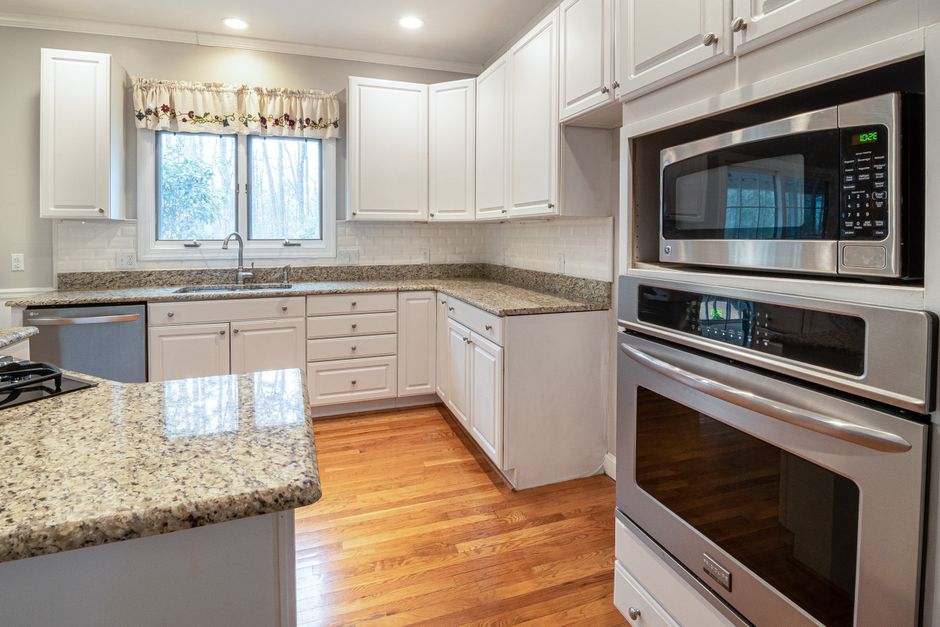
Spacious modern kitchen with white cabinets and granite countertops.

A small chip is usually filled with a tinted epoxy or acrylic resin. The resin is slightly overfilled and left to cure. Then it is shaved flush with a razor blade and polished back to the surrounding sheen.

If the piece that broke off is still around, put it in a bag and keep it. A clean fragment can often be bonded back into place, and that blends better than any filler because it is the original stone.

What to expect from the result

How well a repair hides depends on the granite. Busy, speckled patterns conceal a fill easily. Solid black, uniform white, and gray slabs with long veins show repairs more, and a spot that is slightly dull or slightly off in color is common. A professional repair can look excellent, but it will not always be invisible.

Using a home kit

A home kit is reasonable for a small, shallow chip. The mistake to avoid is sanding the spot with plain sandpaper and stopping there. Without a full polishing sequence afterward, the patch ends up dull and stands out more than the chip did.

Let the resin cure fully according to the product directions, which often means overnight. Wiping it with cleaner or using the area too early can leave a soft or cloudy fill.

How a Crack Gets Evaluated

Check for a height difference

Run your hand across the crack. If both sides sit at the same height, the crack is probably stable, and a thin, low viscosity resin can wick into the gap. That keeps dirt and moisture from collecting in it, although the line usually stays faintly visible.

If one side sits higher than the other, the stone is not being supported evenly. The cause is underneath: a sagging cabinet, a missing shim, or a failed support. That has to be corrected first, or the crack will reopen no matter how well it is filled.

Find out whether it is moving

Mark both ends of the crack with a small pencil tick and take a dated photo. Look again in a few weeks. A crack that grows points to a structural or support cause. A crack that stays put is usually a good candidate for a simple fill.

Know where cracks start

Cracks favor weak points. These include the narrow strips of stone in front of and behind a sink, the corners of sink and cooktop cutouts, and long runs between seams. Inside corners cut square instead of slightly rounded are especially prone, because stress concentrates there.

Look Under the Crack Before Paying for the Surface

Overhangs and bar tops

Island and bar overhangs crack when they lack support and someone sits, leans, or stands on the edge. If an overhang cracked near the cabinet line, brackets or corbels should go in before the crack is repaired.

Undermount sinks

An undermount sink hangs from the stone by clips, anchors, or adhesive. A sink full of water and heavy pots keeps a constant load on the cutout. If the sink has dropped or shifted, the mounting should be redone at the same time as the crack repair.

The dishwasher

A dishwasher should mount to the side cabinets, not be screwed up into the granite. Screws driven into the underside of the stone can split it. Whenever a chip or crack shows up directly above the dishwasher, check this first.

Slab thickness

Thinner 2 cm slabs crack more readily than 3 cm slabs, especially at overhangs and cutouts. They generally need a full plywood subtop or a laminated thicker edge. Knowing which thickness you have helps you decide whether a crack was a one time accident or a sign of a support problem.

Riverside Conditions That Matter

Riverside sits in an active earthquake region, and many homes have settled over decades. After a quake, or when doors begin sticking, check the counters for new cracks and check whether the cabinets have shifted.

In older neighborhoods, such as the historic streets near downtown and the Wood Streets, floors and walls are often out of level. A counter set on cabinets that were not shimmed properly rests on high spots and can crack over time. Checking level and support before paying for cosmetic work is money well spent.

The long, hot dry season adds a smaller factor. Afternoon sun through a west facing window can heat one part of a dark counter far more than the rest. That alone rarely cracks good stone, but it is a reason not to set a hot pan on a sunbaked section that already has a fissure. Granite handles normal cooking heat well, yet sudden concentrated heat can stress an existing fissure and can scorch or cloud the resin many slabs are treated with at the factory. Trivets under hot pans, slow cookers, and electric griddles are cheap insurance.

Seams That Have Opened or Chipped

A seam that has opened or chipped can usually be cleaned out, leveled, and refilled with color matched seam epoxy. Run your hand across it first. If one side is higher, the slabs need to be releveled before refilling, which brings the problem back to support underneath.

Before Assuming It Is Damage

Riverside tap water leaves heavy mineral deposits. White crust or dull rings around the faucet and soap dispenser are often mistaken for etching. Try a stone safe cleaner and a soft pad before deciding the stone needs repair.

Avoid vinegar, lemon based products, and other acidic or harsh cleaners, particularly on repairs and sealed surfaces. They can wear down sealer and dull resin fills. Some stones sold as granite also contain calcite, which acid will etch.

Resealing After the Repair

Once a repair has fully cured, reseal the area. Test it by leaving a few drops of water on the stone. If the spot darkens within several minutes, it is time to reseal. Base the interval on that test rather than a fixed calendar, and remember that a dry climate does not remove the need to seal. Sealer resists stains. It does not prevent chips or cracks.

When Replacement Is the Better Choice

Not every crack means a new countertop. Replacement usually makes sense when:

  • A crack runs through the full thickness of the stone and keeps moving.
  • Several cracks meet in one area.
  • A large piece is missing.

Swapping out a single section is possible, but a new slab rarely matches the old one in color and pattern, so the new piece may stand out. Weigh that against a repair that, on a stable crack with good support, can be both durable and discreet.

The practical order is simple: identify the damage, check whether it is moving, fix whatever is wrong underneath, then repair the surface and reseal.

Read more →

Nearby Service Areas

We also cover Temecula quartz countertops temecula, ca.